

SOFI (Social-Fitness)
Designing an MVP for a sports community platform
SOFI started as an early-stage idea: helping students and young adults find sports partners, join local sports groups, and stay active through community. As the sole UX/UI Designer, I helped shape the first MVP through research, prioritization, and responsive product design.
Project Overview
ROLE - UX / UI Design
LOCATION - On Site
TEAM - 1 Product Owner, 1 Content Manager, 1 Software Engineer, 1 UX/UI Designer
TIMELINE - 1 Year (Sep 2022 - Sep 2023)
SCOPE - Research, MVP definition, information architecture, UX/UI design, prototyping, responsive design, design system

Challenge: The product needed to turn social motivation into a focused MVP
Many people struggle to stay active not only because of time or discipline, but because they lack social support and workout partners. Exercising alone often leads to lower motivation and less consistency over time. SOFI set out to address this by creating a digital space where people with similar interests could connect, join sports communities, find workout partners, and stay engaged through shared activity.
INITIAL ASSUMPTIONS
#1 Social connection could increase motivation
The product started from the belief that exercising with others could help people stay more motivated, accountable, and consistent.
#2 Gamification might improve engagement
Challenges, rewards, and other motivational features were considered potential ways to make the experience more engaging over time.
#3 A simple onboarding flow could reduce friction
The first version needed to feel easy to join, with as few barriers as possible between initial interest and active participation.
EARLY PRODUCT DIRECTION
From the start, stakeholders saw location-based matching and sport type as essential ways to connect relevant users. Finding a workout partner quickly was seen as the core feature, while simplicity and ease of use were treated as key principles for the first experience.
IDEAS FOR LATER STAGES
Longer-term ideas included calendar integration, motivational content, social challenges, and reward-based features.
WHY THIS MATTERED
The challenge was not only to design a sports platform, but to identify which ideas were strong enough to shape a simple, relevant, and realistic MVP.
Research: Understanding the users
Survey with 102 participants aged 19–45
WHAT WE WANTED TO UNDERSTAND
How people exercise, what gets in their way, and what could motivate them to stay active through community.
#1 Motivation wasn't the only barrier
Users often struggled with lack of time, low motivation, and not having anyone to work out with.
#2 Most people were active, but not consistently
Most participants exercised 2–3 times per week, suggesting room for stronger routines and support.
#3 Connection mattered more than complexity
Users liked challenges, rewards, and sharing achievements, but the strongest opportunity was helping them find workout partners and relevant groups.
OBSTACLES
What got in the way
The main obstacles were lack of knowledge, bad weather, and not having workout partners.
DEMOGRAPHICS
Different ages, different needs
The main obstacles were lack of knowledge, bad weather, and not having workout partners.
UNDER 25
Preferred group sports and more social ways of staying active.
OVER 25
Preferred individual sports, struggled more with time management, and were more interested in new social connections.
TAKEAWAY
The research showed that motivation alone wasn't the problem — social connection, accessibility, and lifestyle differences played a major role.
Defining the MVP: Had to stay focused on connection, not feature overload
Based on the research, we narrowed the product down to a focused MVP. The priority was not to build a full sports ecosystem, but to make it easy for users to discover relevant sports, find nearby people, and join or create communities with minimal friction.
PRIORITIZED FOR THE MVP
#1 Matching by location and sport type
Users often struggled with lack of time, low motivation, and not having anyone to work out with.
#2 Simple onboarding
Most participants exercised 2–3 times per week, suggesting room for stronger routines and support.
#3 Workout partner and group discovery
Users liked challenges, rewards, and sharing achievements, but the strongest opportunity was helping them find workout partners and relevant groups.
WHY THIS MATTERED
This helped keep the first version of the product simple, understandable, and aligned with the strongest user need: making sports more social and easier to access.
Defining the MVP: The MVP had to stay focused on connection, not feature overload
The possibilities for the MVP are:
#1 Connect by location & sport type
A simple geolocation system to find people nearby with similar interests, create groups, or organize local events like volleyball games or yoga in the park.
#2 Simple onboarding
Quick signup, sport preferences, and immediate connection—no steep learning curve.
#3 Find workout partner
Core feature: match with training partners or join group activities.
#4 Future additions
-
Emotional support: motivational tips and wellbeing advice.
-
Calendar integration: flexible planning, schedule activities and suggested activities.
-
Challenges & gamification: badges, rewards, and friendly competition.
Design & Prototyping: Wireframes Desktop & Mobile


Design & Prototyping: Homepage and individual registration
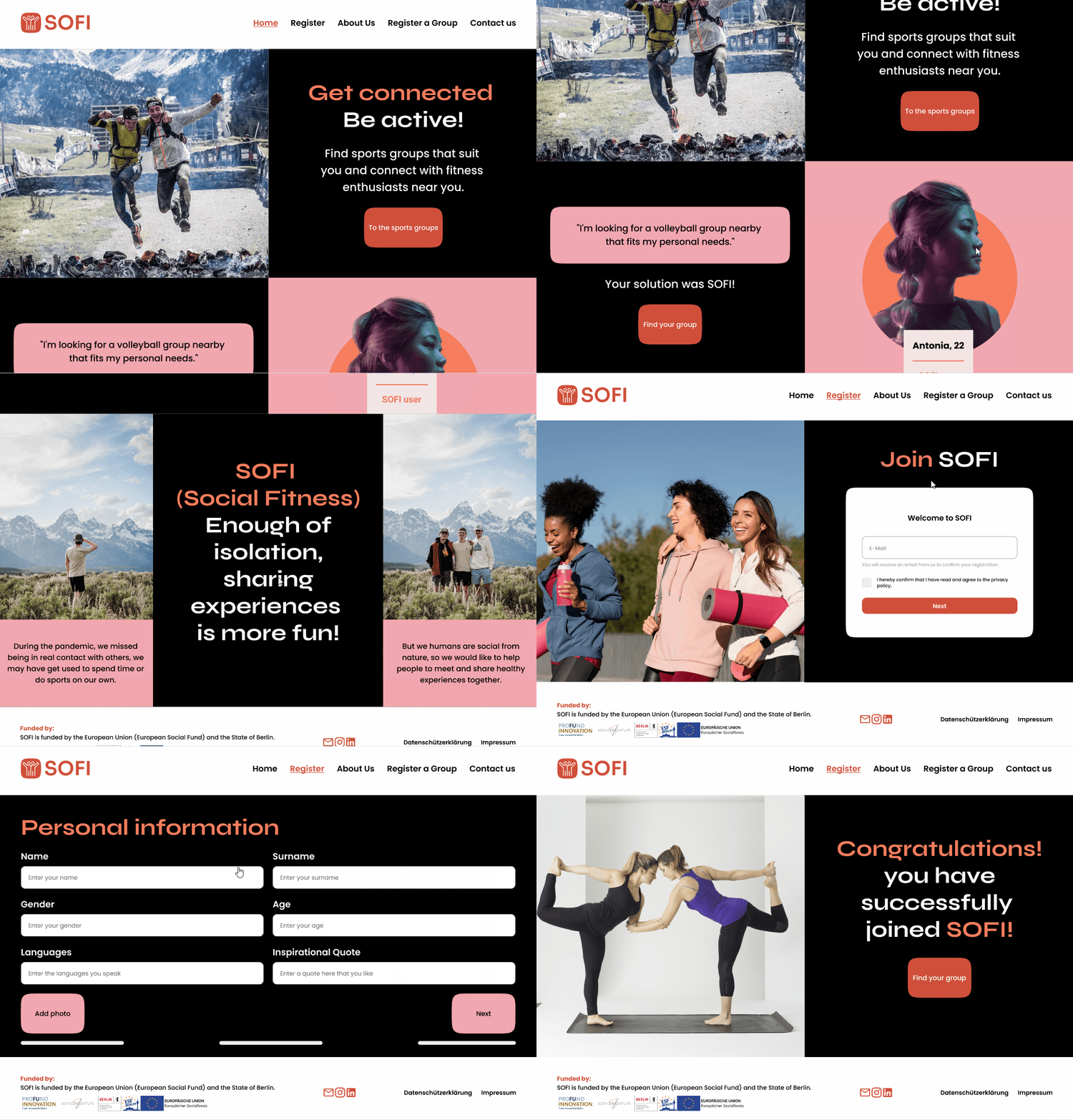
The homepage is SOFI’s welcome point, giving a clear answer to "What is SOFI?" and inviting users to take action immediately.
From there, they can search for existing groups, register a group, or register themselves in just a few steps. To make one-to-one connections easier, we introduced the unique ‘one-person group’ option.
Registration remains intentionally simple—via email and OTP—showing only the essential details needed to protect privacy.
With desktop and mobile designs, the homepage set the tone for a clean, responsive, and accessible experience that encouraged users to start connecting right away.
Desktop and mobile version of the homepage with a sample user registration process (Figma).
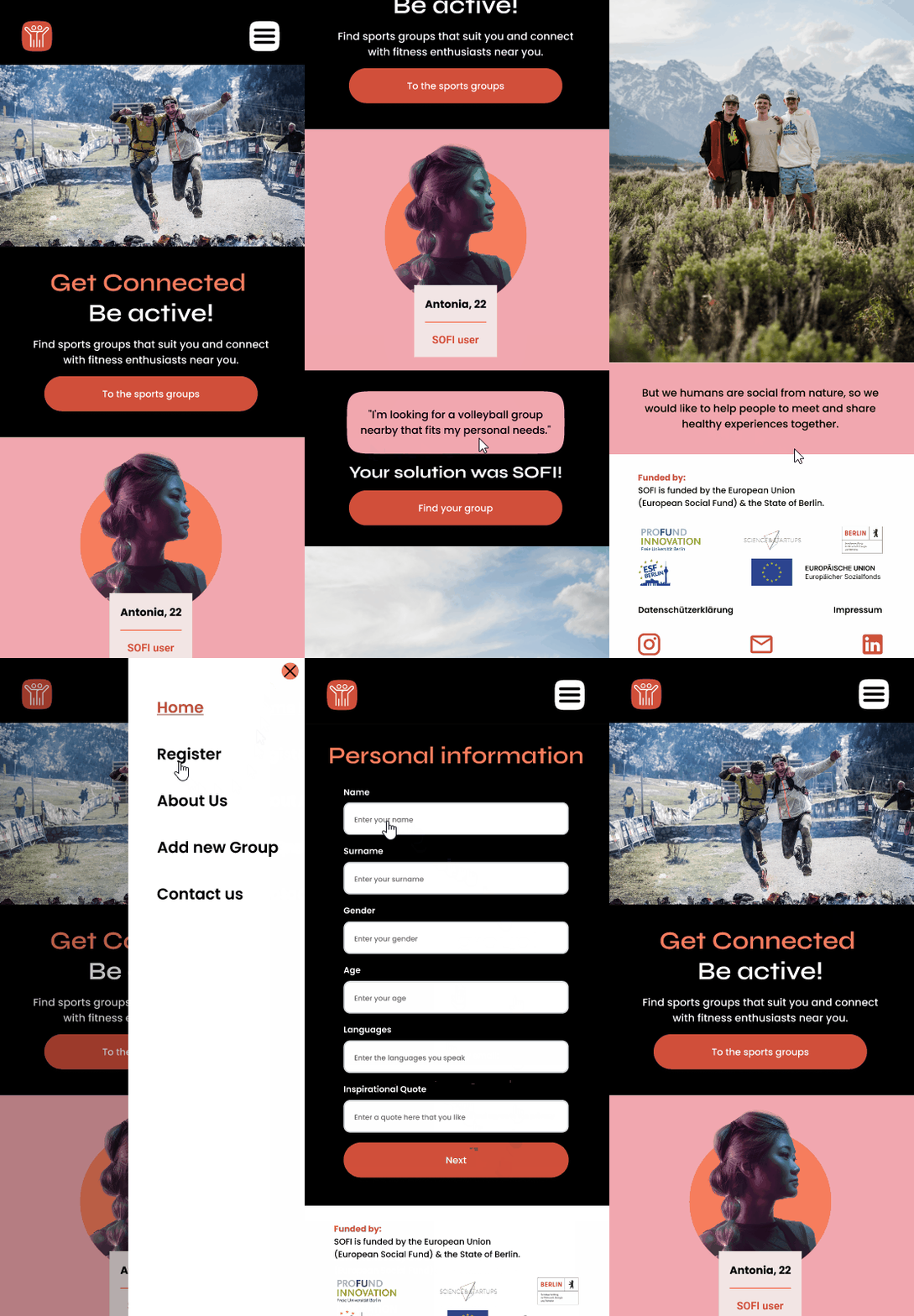
Mobile version of the homepage with a sample user registration process (Figma).
Design & Prototyping: Registration as Individual or Group
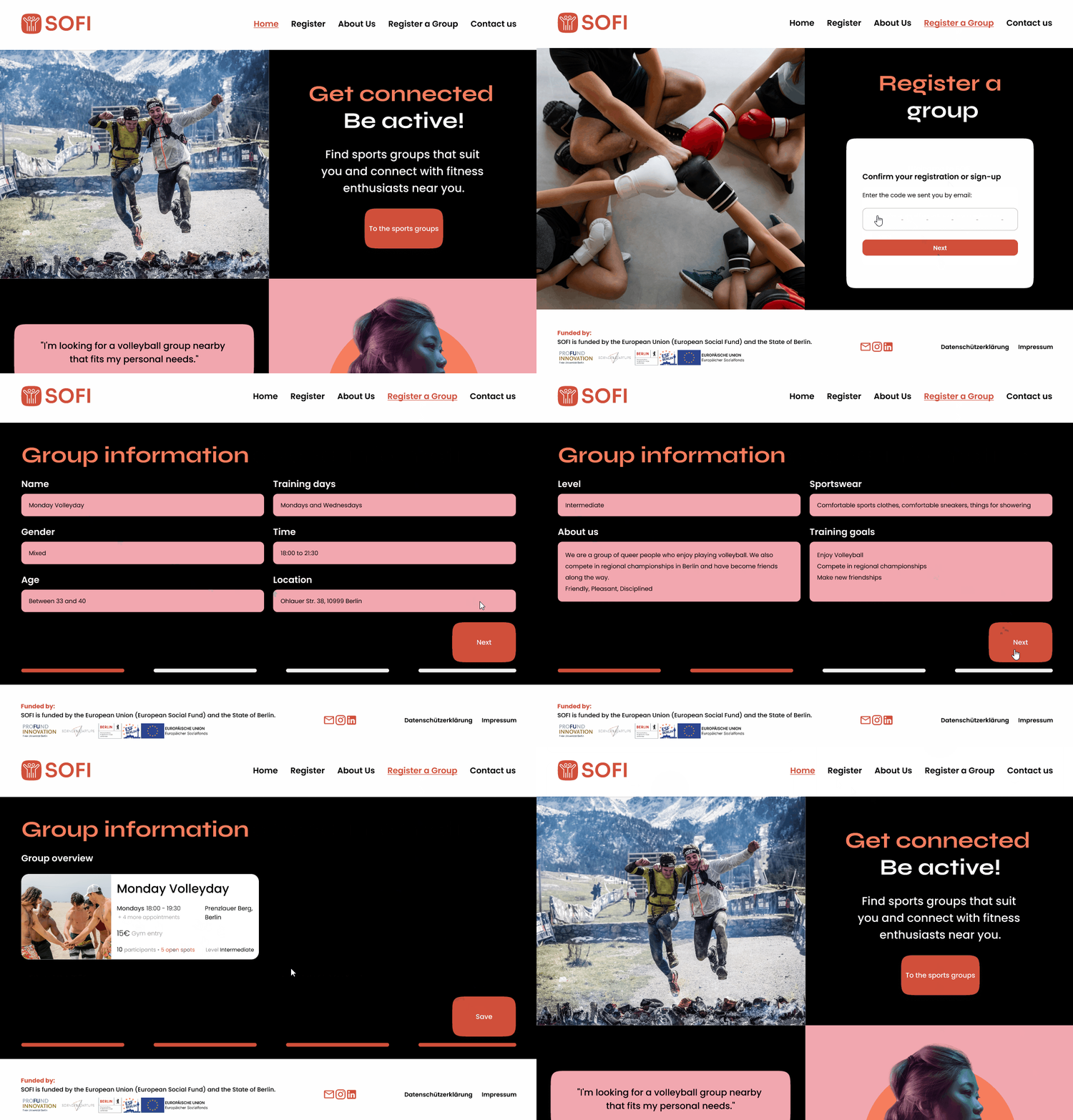
Desktop version of the group registration process (Figma).
Design & Prototyping: Sport type selection & joining a Group
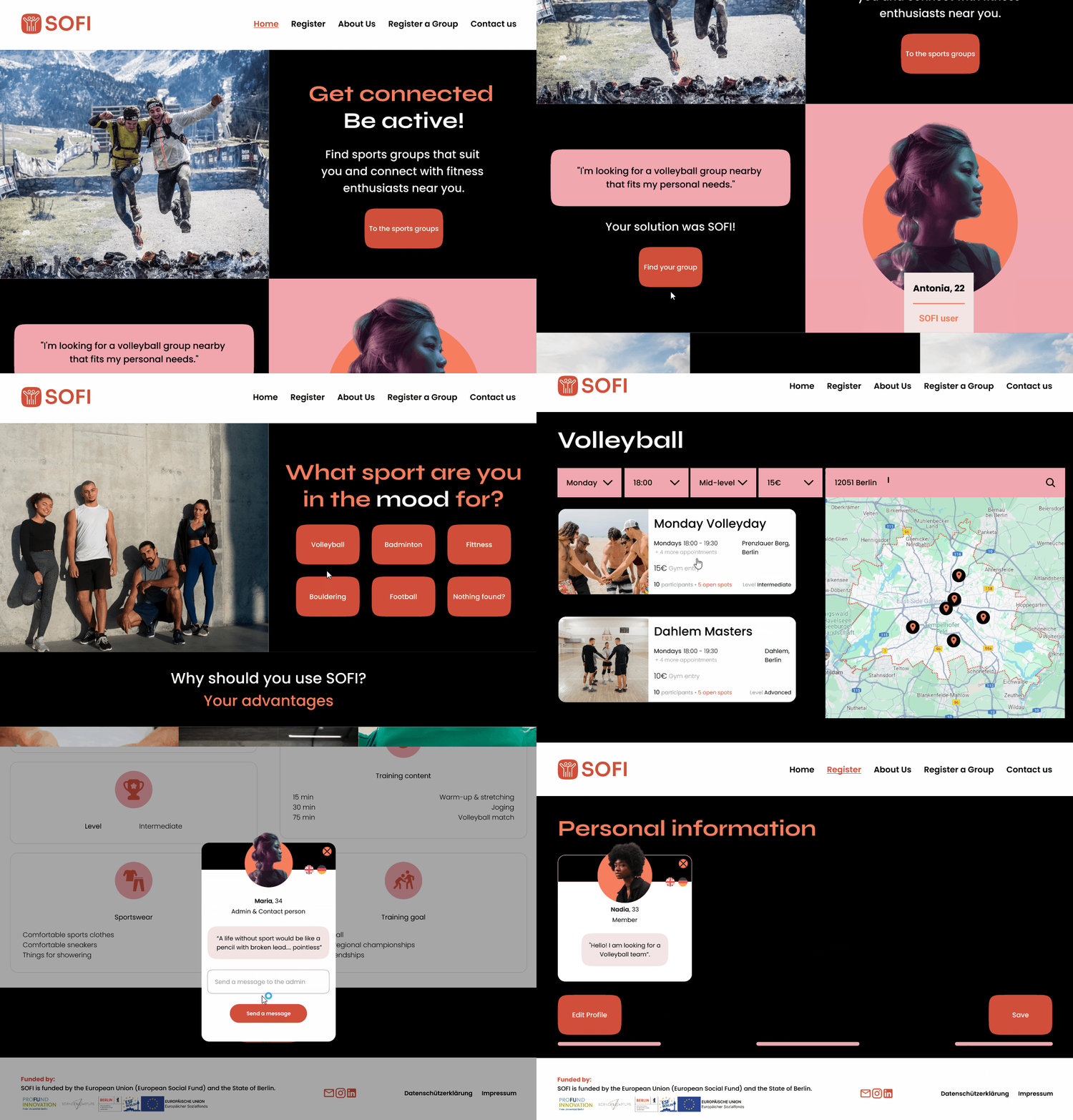
To help users find their community, we designed a simple flow starting with sport selection.
The most popular sports from our survey appear first, paired with short explanations of the SOFI concept to spark motivation.
Once a sport is chosen—say Volleyball—the platform displays existing groups across Berlin, shown by geolocation. Each group profile provides all the essential details: members, skill level, location, training schedule, and goals.
To ensure trust and inclusivity, joining a group requires a short interaction with the administrator. Users can view the admin’s profile, have a first impresion, and send a direct message before being accepted.
Once approved, a confirmation arrives both in the platform and via email, making the onboarding into the community seamless and human.
Overview of the process of searching a group and joining it (Figma).
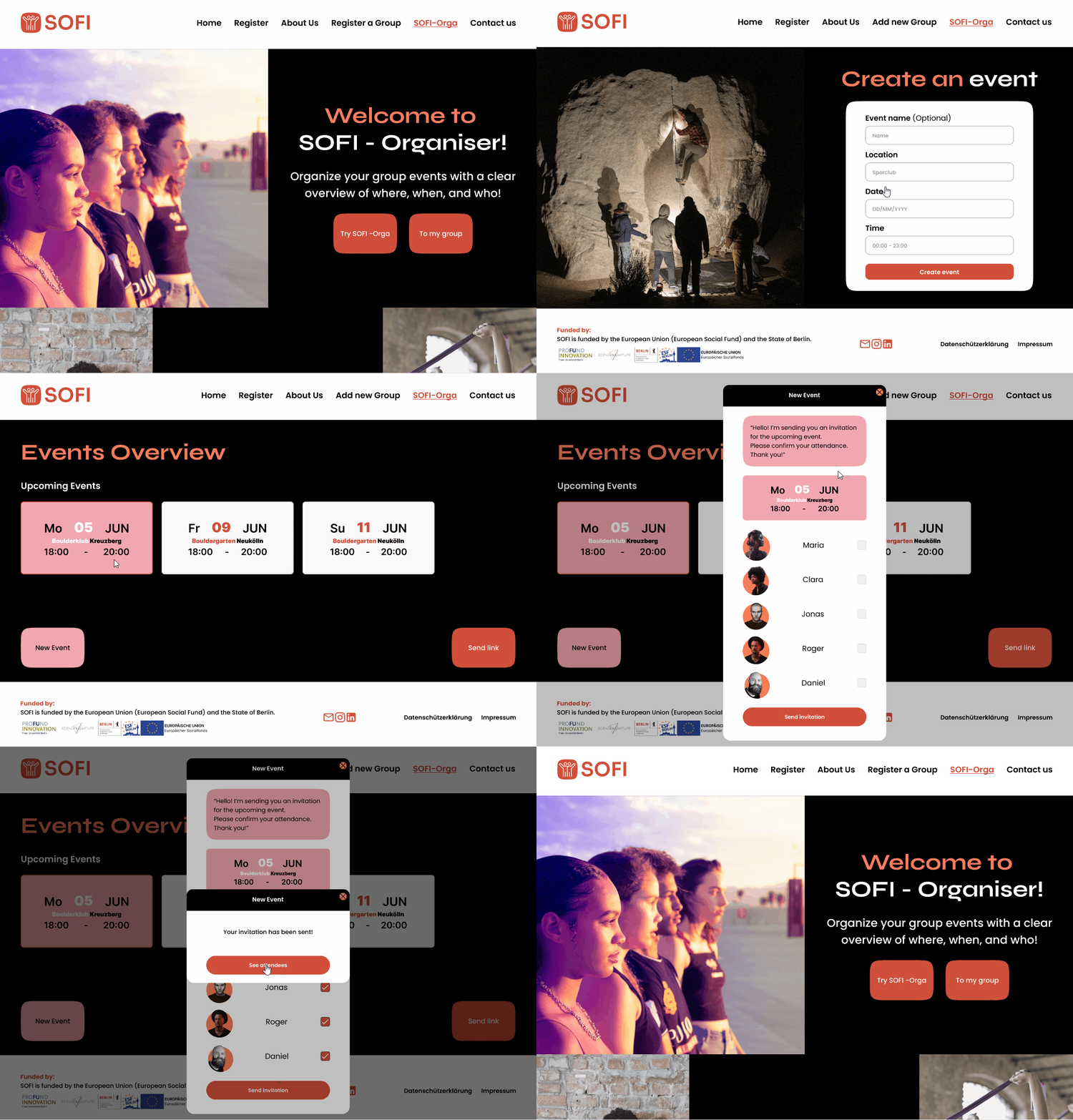
Design & Prototyping: SOFI Organisation feature for event planning
To help groups plan and organize events, the SOFI-Orga feature was added. Administrators can create events with name, location, date, and time, and send invitations via email to all group members.
This way, organizers know in advance how many people will attend, while users can better manage their schedules.
The feature improves coordination and avoids situations where, for example, a volleyball game cannot take place due to lack of players.
Example of how the SOFI-Orga feature works. (Figma)
Iteration & Validation
User tests with 80 students confirmed the partner finder as the most valuable and differentiating feature.
Gamification sparked interest but was considered secondary for the MVP.
Feedback also revealed friction in the registration flow and confusion between groups and events.
This led to improvements in information architecture and usability, ensuring the MVP stayed focused on the core goal: helping people connect and play sports together.
Project impact
SOFI allowed us to define and develop a clear MVP, with a value proposition centered on social connection and sport-partner-finding.
The interface we created was intuitive and consistent, built to be ready for development.
Beyond the product itself, the designs and interactive prototypes became powerful tools to communicate the concept in stakeholder and investor presentations, showing the potential of the platform
Key learnings
One of the biggest challenges was market differentiation. Competing with well-established platforms like Meetup, Facebook, or Strava proved difficult, as they already had a strong user base and visibility.
In terms of segmentation, focusing solely on the under-25 group limited the project, as this audience already had convenient alternatives such as Unisport.
On the other hand, the over-25 demographic (often singles, newcomers to a city, or people practicing individual sports) emerged as an unexplored opportunity that deserved deeper research.
Finally, external limitations also played a role: the project concluded with the end of the Berliner Startup Stipendium, which had been funding SOFI.
Final thoughts : Growth as a Designer
For me, SOFI marked a milestone: it was my first professional experience as a sole UX/UI designer, which meant taking full ownership of the process.
I sharpened my skills in UX research, user-centered design, and building a fully responsive platform, while also learning how to collaborate closely with a software engineer—bridging the gap between design and development to make sure everything was technically feasible.
Through user testing and iteration, I refined navigation and structure, always balancing user needs with business goals. I also gained confidence in product storytelling, learning to present design decisions clearly to stakeholders.
SOFI Final Design: For Mobile version


